

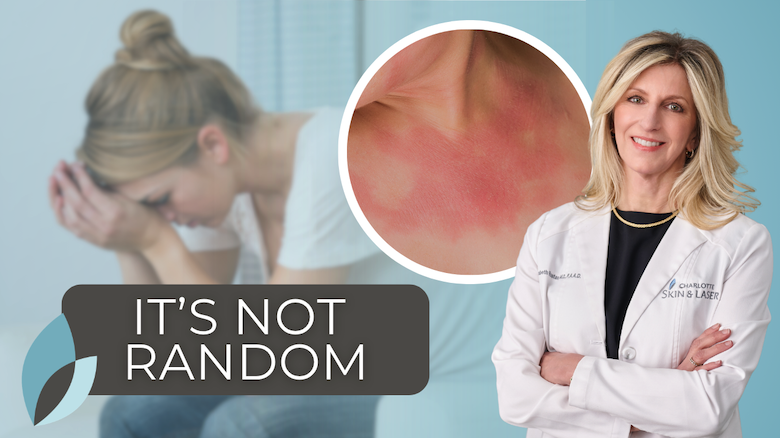
A deep breakout the week of a presentation, red flakes around your nose after three nights of bad sleep, eczema that starts itching again during travel, grief, or a packed season at work…
Stress can show up on your skin before you fully realize how much pressure you are under.
In Episode 39 of Queen City Skin, board-certified dermatologist Dr. Elizabeth Rostan explains how stress hormones, inflammation, disrupted sleep, and changes in the skin barrier can aggravate acne, eczema, seborrheic dermatitis, and psoriasis. She also shares how steady maintenance and early treatment can keep a small change from gathering momentum.
Listen to Episode 39: Why Stress Triggers Skin Flares
How Does Stress Affect Your Skin?
When pressure builds, your body releases stress hormones such as cortisol. Those hormones can change immune signaling, increase inflammation, affect oil production, and interfere with the skin’s ability to recover. The result may appear in the mirror as a painful breakout, a red patch, fresh itching, or a condition that had been quiet for months.
Common signs of a stress-related flare include:
- Deeper or more frequent acne breakouts
- Red, flaky skin around the nose, eyebrows, ears, or scalp
- Itchy eczema patches
- Thicker or more visible psoriasis plaques
- Increased dryness, sensitivity, or irritation
Stress also lowers the amount of provocation your skin can handle. Think of a pot of water already close to boiling. It takes very little extra heat to send it over the edge. Inflamed skin behaves in a similar way. Once the barrier weakens and symptoms start, the next flare may arrive faster.
Why Does Poor Sleep Make Skin Flares Worse?
Stress and lost sleep make a particularly unhelpful pair.
While you sleep, your skin works on barrier recovery, immune regulation, and cellular repair. The barrier holds moisture in and helps protect the skin from irritants, allergens, and infection. Sleep restriction can delay that recovery process and weaken local immune responses.
When repair falls behind, you may notice:
- Tightness or rough texture
- Increased water loss and dryness
- More itching
- Greater sensitivity to products
- Redness that lingers
- Existing conditions becoming harder to settle
This matters greatly for eczema and other conditions tied to barrier dysfunction. A consistent routine helps, but several short nights can leave the skin struggling to catch up.
For a closer look at what your skin does overnight, listen to Episode 24: Why Sleep Shows on Your Skin. Dr. Rostan and Robyn Allen, RN, discuss barrier repair, inflammation, breakouts, redness, and the visible effects of poor sleep.
Which Do Skin Conditions Commonly Flare During Stress?
Several inflammatory skin conditions respond quickly when cortisol rises, sleep drops, and daily routines fall apart.
Acne
Stress can increase oil production and inflammation, creating the right conditions for more breakouts. Patients often describe painful cysts along the chin or jawline appearing during work deadlines, travel, emotional strain, or weeks of poor sleep.
Steady treatment gives acne-prone skin a better chance of staying clear. Stopping every product as soon as the last blemish fades can leave the underlying condition ready to return.

Charlotte Skin & Laser creates individualized acne treatment plans based on the type of acne, where it appears, previous treatments, and the risk of marks or scars. For Dr. Rostan’s full discussion of hormonal and adult breakouts, listen to Episode 37: Acne Isn’t Just for Teens.
Seborrheic Dermatitis
Seborrheic dermatitis often creates redness and greasy or powdery flakes around the nose, eyebrows, ears, hairline, or scalp. Some patients can practically read their stress level on these areas.
A little flaking can turn into a stubborn, visible rash when it sits untreated. Early care helps calm the inflammation and limits how far the flare spreads.
Eczema
Eczema affects both inflammation and barrier function. Stress, lost sleep, cold or dry weather, hot showers, and skipped moisturizer can quickly intensify the itch.
Patches often appear around the elbows and knees, though eczema can also affect the face, hands, arms, legs, and trunk. Scratching creates additional damage, which fuels another round of itching and inflammation.
Daily moisture remains one of the most useful forms of support. The American Academy of Dermatology recommends keeping eczema-prone skin moisturized and working with a dermatologist on a treatment plan when flares persist.
Psoriasis
A patient can have excellent psoriasis control and still experience a stress-related flare. Plaques may thicken, spread, or return in areas that had cleared.
Continue medication as directed and contact your dermatology team when familiar symptoms begin to change. Stress, winter weather, and other everyday triggers can all affect psoriasis activity, and each patient’s pattern looks different.

Schedule A Consultation
Integrating The Art of Medicine with the Science of Beauty
At Charlotte Skin & Laser, we offer personalized skincare with a boutique touch—combining medical expertise and aesthetic artistry to deliver natural, results-driven care. From skin checks to rejuvenation, our expert team is here to guide you.
Why Does Early Treatment Matter?
Watch for the first shift: a few deeper breakouts, a patch that keeps itching, flakes that return every morning, or redness that starts covering a larger area.
That is the time to call.
Early treatment can shorten the flare and help restore control before the skin reaches its tipping point. Depending on the condition, your dermatology team may recommend an office visit, a prescription, an adjustment to your existing plan, an in-office treatment, or a specific over-the-counter option.
Contact your dermatologist when you notice:
- Breakouts becoming painful, deep, or frequent
- Redness spreading or intensifying
- Itching that interrupts sleep
- Cracking, oozing, or signs of infection
- Flaking that continues despite your usual routine
- Eczema or psoriasis returning after a quiet period
- A familiar treatment losing its effect
Early acne care can also reduce the chance of persistent marks and scarring. Charlotte Skin & Laser provides medical dermatology care for acne, eczema, psoriasis, dry skin, rosacea, and other inflammatory conditions.
How Can You Protect Your Skin During a Stressful Season?
Consistency carries the most weight when your schedule feels chaotic.
Keep the acne medication going. Use the eczema moisturizer before the itch returns. Pack your routine before a trip instead of throwing random samples into a cosmetic bag at the last minute. Give dry-weather skin extra moisture before it starts cracking.
A simple stress-season plan may include:
- Continue the treatment plan prescribed for your condition
- Wash with a gentle cleanser
- Moisturize after cleansing and whenever the skin feels tight
- Prepare for travel, cold weather, or dry air in advance
- Protect your sleep schedule where you can
- Call the office when symptoms start to change
- Keep unfamiliar actives and aggressive scrubs off irritated skin
A dependable cleanser and moisturizer can make the routine easier to maintain. The Charlotte Skin & Laser Skin Store carries CLn Facial Cleanser, CLn Facial Moisturizer, and EltaMD Moisture Seal. Your dermatology team can help you choose the right level of moisture and decide how those products fit with prescription treatment.
Patients dealing with tightness, roughness, or persistent itching can also learn about dry skin treatment and home care.
Can Stress and Skin Problems Feed Each Other?
Yes. Stress triggers a flare. The flare becomes one more thing to worry about. Facial breakouts affect confidence. Itching interrupts sleep. Visible plaques make getting dressed or going to work feel harder.
Then the next day begins with less rest and more stress.
Treating the skin removes one source of that pressure. You can share as much or as little about the personal circumstances behind the flare as you feel comfortable sharing. Your dermatologist can examine the condition, discuss treatment, and place useful tools in your hands without asking you to explain every difficult detail.
Dr. Rostan describes the Charlotte Skin & Laser approach as big-office expertise with a small-office feel. Patients receive advanced medical care in an environment that stays personal, supportive, and free of judgment.
When stress begins affecting sleep, mood, relationships, work, or physical health, outside support may also belong in the plan. Dr. Rostan and the Charlotte Skin & Laser team can help connect you with the right support. That may include counseling resources, help with an overloaded schedule, or guidance on where to turn next. Your skin may be the first clue that your body needs attention in other areas, too.
When Should You See a Dermatologist for a Stress-Related Flare?
Schedule a visit when redness, itching, flaking, breakouts, or plaques begin increasing, especially when your regular routine no longer keeps the condition settled.
The medical dermatology team at Charlotte Skin & Laser can identify what is flaring, adjust treatment, recommend appropriate home care, and give you a plan for the next time life turns up the pressure.
Call early. Bring the temperature back down.
Request a medical dermatology appointment at the Myers Park or Huntersville office, or text or call 704-333-9113.

