

The heat kicks on for the first chilly night of fall. By the weekend, the patch behind your knee is back, your hands are cracked, and your toddler is scratching through bedtime…
For the more than 31 million Americans living with eczema, cooler weather often means more flares. October is also Eczema Awareness Month, a good time to look at (and be in awe of) how much eczema care has changed in the last ten years.
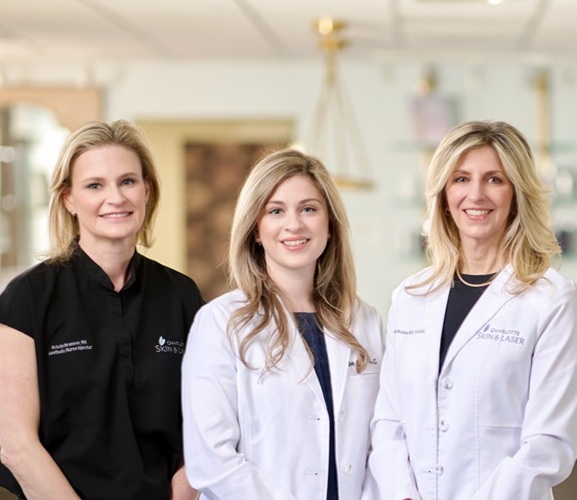
In Episode 44 of Queen City Skin, board-certified dermatologist Dr. Elizabeth Rostan sits down with Charlotte Skin & Laser dermatologist Dr. Alexandra Montgomery. They cover why eczema keeps coming back, the at-home habits that still matter, and the targeted treatments giving babies, kids, and adults real relief.
Listen to Episode 44: What's Changed in Eczema Care
What Is Eczema?
Eczema is an umbrella term for several inflammatory skin conditions. Most people who say “eczema” mean atopic dermatitis, a chronic condition that often runs in families and usually starts in infancy or childhood.
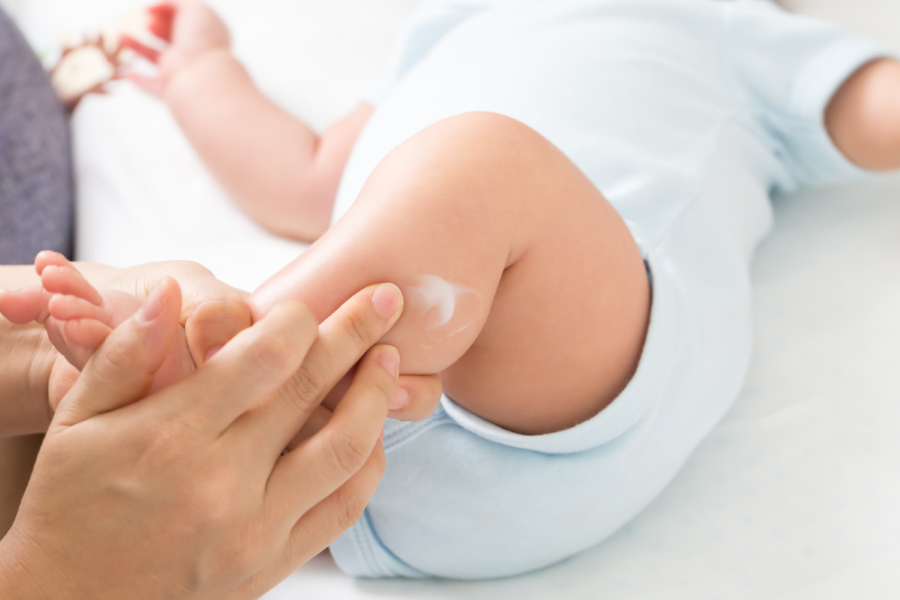
It tends to show up as dry, itchy skin in the creases of the elbows and behind the knees. Babies often get it on their cheeks and in skin folds.
Dermatologists call eczema “the itch that rashes.” The itch comes first, and scratching creates the rash.
Why Does Eczema Keep Flaring?
Eczema runs on a cycle, and each step feeds the next:
- A weak barrier. Dr. Rostan compares healthy skin to roof shingles. With eczema, the shingles don’t line up, so irritants get in and moisture escapes.
- Itch. That leaky barrier itches, and scratching damages it further.
- Inflammation. Scratching invites inflammation, which makes the itch worse.
Dr. Montgomery describes the result to parents as whack-a-mole. One patch clears, and another pops up somewhere new. That’s how eczema behaves, and your routine is still worth keeping up.
The itch also costs sleep for patients, and for the parents up with them. Poor sleep makes skin harder to settle. For more on that connection, listen to Episode 24: Why Sleep Shows on Your Skin.
How Can You Prepare Your Skin for Fall and Winter?
Start before the first flare. Indoor heat dries the air, and dry air pulls moisture from skin that already struggles to hold it.
A cold-weather plan may include:
- Running a humidifier in the bedroom
- Switching to fragrance-free body wash and lotion
- Moisturizing right after bathing, every day
Try “Soak and Smear”
This is one of Dr. Rostan’s favorite methods, and she uses it herself in winter:
- Soak in a lukewarm bath.
- While skin is still damp, apply any prescribed medication.
- Seal it all in with a thick, greasy moisturizer.
Shop Our Eczema-Friendly Favorites
EltaMD Moisture Seal is the thin, greasy moisturizer Dr. Rostan reaches for to finish her soak and smear. (Her dogs wait outside the shower hoping to lick it off.)
CLn BodyWash is made with sodium hypochlorite, the key ingredient in the diluted bleach baths dermatologists sometimes recommend for eczema. It works as an everyday body wash, bringing that ingredient into your daily shower. Ask your dermatologist whether it fits your routine.
How Does Charlotte Skin & Laser Treat Eczema?
Eczema treatment has changed more in the last decade than in the decades before it. Ten or fifteen years ago, a bad flare might mean oral steroids, which Dr. Rostan compares to throwing a fire blanket over the whole immune system. Today’s options are far more precise.
At Charlotte Skin & Laser, the medical dermatology team builds each plan around the patient’s skin and daily life. Options discussed in Episode 44 of Queen City Skin include:
- Barrier repair routines. Bathing, moisturizing, and soak-and-smear plans tailored to the season. For kids with severe flares, this can include wet wraps: damp cotton pajamas with a dry layer on top.
- Prescription topical treatments. Steroid creams chosen by strength and body area, with clear limits on how long to use them. “It’s way better, way safer than uncontrolled inflammation,” Dr. Rostan says.
- Diluted bleach baths, when your dermatologist recommends them, to reduce bacteria on the skin.
- Biologic injections. These target the specific immune signals behind eczema. Dupixent is approved for babies as young as 6 months. Newer options include Ebglyss and Adbry for adolescents and adults.
- Oral JAK inhibitors. Pills such as Rinvoq and Cibinqo offer a path for patients who would rather avoid injections. Your dermatologist will review your health history to see if one fits.
- Coordinated care. The team works with your pediatrician, allergist, or pulmonologist, since eczema often travels with allergies and asthma.
- Telehealth follow-ups. Once eczema is under control, some check-ins can happen virtually for North Carolina patients.
If the first treatment doesn’t deliver the results you want, there are more to try. Dr. Rostan puts it this way: “In many ways, we’re lifestyle enablers freeing people of their skin disease.”
For younger patients, learn more about pediatric dermatology at Charlotte Skin & Laser.
When Should You See a Dermatologist for Eczema?
Schedule a visit when eczema starts affecting sleep, work, school, or family life, or when your usual routine stops keeping it settled.
Call when you notice:
- Itching that keeps you or your child up at night
- Patches that spread or keep appearing in new spots
- Skin that cracks, oozes, or looks infected
- Thick, darkened, or leathery patches
- A treatment that has stopped working
You don’t have to tough it out. Call early. Get your nights back.
Request a medical dermatology appointment at the Myers Park or Huntersville office, or text or call 704-333-9113.
Schedule A Consultation
Integrating The Art of Medicine with the Science of Beauty
At Charlotte Skin & Laser, we offer personalized skincare with a boutique touch—combining medical expertise and aesthetic artistry to deliver natural, results-driven care. From skin checks to rejuvenation, our expert team is here to guide you.
Frequently Asked Questions
Is eczema contagious?
No. You can’t catch eczema from someone or pass it to anyone else.
Will my child grow out of it?
Some children do, but it can take years. Kids deserve comfortable skin and a full night’s sleep now, so there’s no reason to wait on treatment.
Does eczema look different on darker skin?
Yes. On lighter skin, eczema usually looks red. On deeper skin tones, the redness can be subtle, so the rash may look ashy or bumpy and get mistaken for dry skin. “You’re just a little ashy,” Dr. Montgomery says patients often hear. A dermatologist who knows what to look for can catch it sooner.
Should I cut foods from my child's diet?
Talk with your care team first. Recent research suggests heavy food restriction in children with eczema may raise their risk of developing food allergies. Dr. Montgomery often coordinates with a family’s pediatrician and allergist so everyone agrees on a safe plan.
Where can I get eczema treatment in Charlotte?
Charlotte Skin & Laser treats eczema in adults and children at two locations: 130 Providence Road in Charlotte and 9920 Kincey Avenue, Suite 190, in Huntersville.
Does Charlotte Skin & Laser treat babies and children with eczema?
Yes. The practice offers pediatric dermatology, and some newer treatments, including Dupixent, are approved for babies as young as 6 months.

